Editorial Summary
A four-day São Paulo itinerary for first-time visitors who want culture, food, neighborhoods, and a realistic plan for moving around Latin America’s biggest city with confidence.
Status
Ready to Publish
Production Date
2026-05-18
Category
São Paulo
Tags
Sao Paulo itinerary, First time in Sao Paulo, Brazil city break, Avenida Paulista, Liberdade, Ibirapuera Park, Sao Paulo food
Base44 Image Prompt
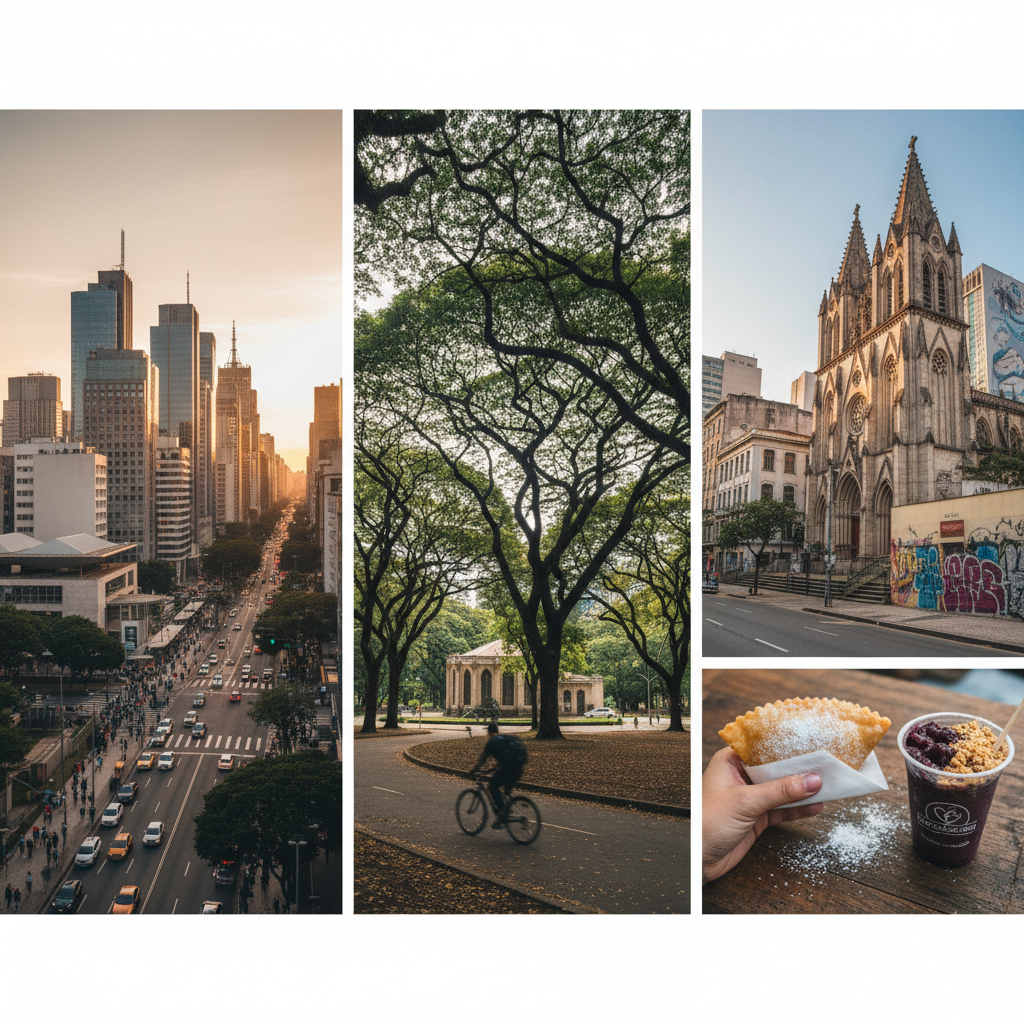
Create a premium editorial 16:9 image for the BR SEM FIO portal, representing a first-time four-day trip to São Paulo. Realistic travel photography style in Brazil, featuring Avenida Paulista skyline, leafy Ibirapuera Park, historic downtown architecture, street food details, and a clean urban composition. Natural light, authentic metropolitan atmosphere, no text, no logos, no visible trademarks, no identifiable faces. Inviting, professional, vivid, and globally appealing.
Published on WordPress
No
Article Markdown
São Paulo 4 Day Itinerary for First-Time Visitors
São Paulo can be intimidating on a first trip to Brazil because it does not sell itself in the easy way that beach cities do. It is large, dense, multilingual, and constantly moving. That is exactly why it matters. For international travelers, São Paulo is often the place where Brazil starts making sense: the mix of immigrant food traditions, major museums, business energy, nightlife, and neighborhood identity gives you a more grounded feel for the country than a postcard itinerary ever could.
This guide is built for travelers who want a practical four-day city break rather than a rushed checklist. It focuses on what first-time visitors actually need to know: where to base yourself, how to move around, when to rely on the metro versus ride apps, what to eat first, and how to explore without treating the city like an obstacle course.
Why This Brazil Travel Experience Matters
São Paulo is best for travelers who like cities that reward curiosity. If you enjoy museums, architecture, food markets, live music, and neighborhoods with distinct personalities, you can easily fill four days here. Three days is the minimum; four days is ideal for a first visit because it gives you room to balance major sights with slower local experiences.
The best time to visit depends more on your tolerance for heat and rain than on a single “perfect” season. April to June and August to November are often easier for long walks and neighborhood days, while summer can be hot, humid, and stormy. The main planning challenge is scale. Distances that look manageable on a map can turn into long cross-city trips in traffic, so organizing each day by area matters more in São Paulo than in smaller Brazilian destinations.
What makes the experience genuinely Brazilian is the city’s layering. Japanese heritage in Liberdade, Italian influences in food culture, Afro-Brazilian history, modernist landmarks, botecos, bakeries, and world-class museums all sit inside the same urban sprawl. You are not visiting one single “old town”; you are reading Brazil through neighborhoods.
How to Get There and Move Around
Most international travelers arrive through GRU Airport. The airport’s official information highlights several transport options, including train, taxi, and app-based pick-up areas. GRU’s train access connects to CPTM Line 13-Jade and onward links into the city rail network, which is useful if you are traveling light and staying near a rail connection. The official metro tourism page also notes that São Paulo’s Bilhete Único card integrates bus and metro rides, but it requires a CPF, which most foreign visitors do not have. In practice, many travelers rely on a mix of metro, contactless fare options where available, and ride apps.
Quick Logistics Overview
- Best arrival city: São Paulo
- Nearest airport: GRU for most international arrivals; Congonhas for many domestic connections
- Best way to get around: Metro and train by day, ride apps at night or across awkward routes
- Average transfer time: Highly variable; airport trips can take much longer during rush hour
- Road or transport warning: Traffic can reshape your day if you cross town at peak times
- Best time of day to travel: Mid-morning and early afternoon are usually easier than weekday rush hours
Practical Quick Guide
Top Experiences
- Experience 1: Walk Avenida Paulista on a museum-and-city day.
- Experience 2: Spend a slow half-day in Ibirapuera Park.
- Experience 3: Explore Liberdade beyond the souvenir shops.
- Experience 4: Give downtown a structured visit.
- Experience 5: Reserve one night for food and music.
SEM FIO Travel Tip:
In São Paulo, plan your day by neighborhood, not by attraction list. Crossing the city too many times wastes energy and makes the city feel harder than it is.
What to Eat and Drink
São Paulo rewards travelers who eat across formats, not only across cuisines. Start with what locals actually do: bakery breakfast, coffee, savory snacks, and a proper lunch. Coxinha and pastel are easy first orders if you want accessible street-food style snacks. At markets and casual counters, look for fresh juice, salgados, and classic sandwiches, but use your judgment with lines and cleanliness as you would in any major city.
Liberdade is the obvious stop for Japanese-Brazilian food, but do not reduce the city to sushi alone. São Paulo’s food culture is shaped by waves of migration, so it makes sense to move between Japanese, Italian-influenced pizza, Arab snacks, and classic boteco plates. For a more local evening, order draft beer, a few shareable plates, and let dinner stretch.
If you visit Mercado Municipal, go for the atmosphere and variety rather than assuming every famous counter is the best value. Tourist-oriented food halls in central locations can be fun, but they are not always the most balanced choice for price or quality. A useful rule in São Paulo is to mix one iconic stop with one neighborhood meal chosen for comfort and rhythm rather than internet hype.
Safety and Cultural Etiquette
Balanced safety habits matter in São Paulo, but fear-based travel advice is not useful. Most visitors have a smooth trip when they stay attentive. Use the same urban instincts you would use in any very large city: keep valuables out of sight, do not walk while staring at your phone near the curb, and prefer ride apps late at night if the street feels empty.
On public transport, avoid flashing cash or expensive gear. In nightlife areas, confirm your route back before drinking heavily. If you need directions, ask inside shops, hotels, museums, or staffed transit points rather than stopping randomly on the street.
A few Portuguese basics help a lot: bom dia (good morning), boa tarde (good afternoon), por favor (please), and obrigado/obrigada (thank you). Card payment is common, but always check the amount before tapping or inserting your card. Tipping is usually modest in Brazil, and many restaurants add a service charge automatically.
Dress is generally casual, but São Paulo style varies by neighborhood. People dress more sharply for nightlife and upscale restaurants than for daytime museum visits. The biggest etiquette point is practical: respect people’s time, book where needed, and avoid assuming English will be widely spoken outside the most international parts of the city.
Estimated Costs
All costs in São Paulo are estimates and can change quickly depending on season, exchange rate, events, neighborhood, and your travel style.
What Affects Your Budget
- Season: Major holidays and event periods can lift hotel prices fast
- Exchange rate: This shapes your daily costs if you are budgeting in dollars or euros
- Destination popularity: Prime areas near Paulista, Pinheiros, and Vila Madalena tend to cost more
- Accommodation style: Hostels, business hotels, boutique stays, and luxury towers vary widely
- Transport choices: Frequent ride-app use adds up quickly in a city this large
- Tours and activities: Museums may be affordable, but nightlife and tasting menus can change the math
- Food preferences: Bakery breakfasts and casual lunches are far cheaper than trend-driven dinners
What to Pack
- Comfortable walking shoes for pavement, museums, and uneven downtown surfaces
- A compact umbrella or light rain jacket
- One smarter outfit for restaurants or nightlife
- A crossbody bag you can keep close in crowds
- A portable charger so you are not stranded without maps or ride apps
Common Mistakes to Avoid
- Mistake 1: Trying to cover Paulista, downtown, Ibirapuera, and Pinheiros all in one day
- Mistake 2: Booking the cheapest hotel without checking the street context and metro access
- Mistake 3: Treating the city like a transfer hub instead of giving it enough time to unfold
- Mistake 4: Using rush hour for long cross-city journeys that could have been reorganized
Suggested Itinerary
Day 1
- Morning: Arrive, check in, and settle into your neighborhood instead of forcing a full sightseeing day
- Afternoon: Walk Avenida Paulista and visit one museum or cultural center
- Evening: Easy dinner nearby and an early night
Day 2
- Morning: Explore downtown São Paulo on a focused route with architecture and history in mind
- Afternoon: Lunch in the center, then head to Liberdade for shops, sweets, and a late coffee
- Evening: Japanese-Brazilian dinner or izakaya-style meal in Liberdade or nearby districts
Day 3
- Morning: Spend time in Ibirapuera Park before the day gets hotter
- Afternoon: Add a museum, design stop, or long lunch in Jardins or Pinheiros
- Evening: Drinks, live music, or dinner in Pinheiros or Vila Madalena
Day 4
- Morning: Bakery breakfast and a relaxed neighborhood walk
- Afternoon: Return to your favorite area for shopping, one final museum, or a market stop
- Evening: Leave extra time for airport transfer, especially on weekdays
Final Thoughts
São Paulo is not a city that asks to be consumed quickly. It asks for structure, patience, and appetite. If you give it four days and organize them well, the city stops feeling overwhelming and starts feeling deeply rewarding. For first-time visitors to Brazil, that is valuable. You leave with a broader understanding of the country, better urban travel instincts, and a more realistic sense of how Brazilians live, eat, move, and socialize in one of the hemisphere’s biggest cities.
References:
- GRU Airport, “To/From the Airport – Train” https://www.gru.com.br/en/passenger/to-from-gru-airport/train/
- GRU Airport, “To/From the Airport – Taxi” https://www.gru.com.br/en/passenger/to-from-gru-airport/taxi
- São Paulo Metro, “TurisMetrô” https://www.metro.sp.gov.br/pt_BR/sua-viagem/turismetro/
- Government of the State of São Paulo, “Pontos Turísticos” https://www.sp.gov.br/sp/conheca-sp/pontos-turisticos
- Government of Brazil G20, “São Paulo – SP” https://www.gov.br/g20/en/about-the-g20/host-cities/sao-paulo-sp
WordPress HTML Content
São Paulo 4 Day Itinerary for First-Time Visitors
São Paulo can be intimidating on a first trip to Brazil because it does not sell itself in the easy way that beach cities do. It is large, dense, multilingual, and constantly moving. That is exactly why it matters. For international travelers, São Paulo is often the place where Brazil starts making sense: the mix of immigrant food traditions, major museums, business energy, nightlife, and neighborhood identity gives you a more grounded feel for the country than a postcard itinerary ever could.
This guide is built for travelers who want a practical four-day city break rather than a rushed checklist. It focuses on what first-time visitors actually need to know: where to base yourself, how to move around, when to rely on the metro versus ride apps, what to eat first, and how to explore without treating the city like an obstacle course.
Why This Brazil Travel Experience Matters
São Paulo is best for travelers who like cities that reward curiosity. If you enjoy museums, architecture, food markets, live music, and neighborhoods with distinct personalities, you can easily fill four days here. Three days is the minimum; four days is ideal for a first visit because it gives you room to balance major sights with slower local experiences.
The best time to visit depends more on your tolerance for heat and rain than on a single perfect season. April to June and August to November are often easier for long walks and neighborhood days, while summer can be hot, humid, and stormy. The main planning challenge is scale. Distances that look manageable on a map can turn into long cross-city trips in traffic, so organizing each day by area matters more in São Paulo than in smaller Brazilian destinations.
What makes the experience genuinely Brazilian is the city’s layering. Japanese heritage in Liberdade, Italian influences in food culture, Afro-Brazilian history, modernist landmarks, botecos, bakeries, and world-class museums all sit inside the same urban sprawl. You are not visiting one single old town; you are reading Brazil through neighborhoods.
How to Get There and Move Around
Quick Logistics Overview
- Best arrival city: São Paulo
- Nearest airport: GRU for most international arrivals; Congonhas for many domestic connections
- Best way to get around: Metro and train by day, ride apps at night or across awkward routes
- Average transfer time: Highly variable; airport trips can take much longer during rush hour
- Road or transport warning: Traffic can reshape your day if you cross town at peak times
- Best time of day to travel: Mid-morning and early afternoon are usually easier than weekday rush hours
Practical Quick Guide
Travel Detail Practical Information Best time to visit April to June and August to November are often the easiest months for walking and sightseeing Ideal trip length 4 days Best base city São Paulo city Estimated daily budget Usually medium to high for Brazil; central stays and frequent app rides raise costs quickly Main transport option Metro and CPTM for daytime efficiency, ride apps for late evenings and point-to-point comfort Safety level and precautions Stay aware in crowded areas, keep your phone discreet, and avoid empty streets late at night Must-try local food Pastel, coxinha, pizza, market sandwiches, and Japanese-Brazilian meals Best local experience Combining Avenida Paulista, Liberdade, and a long meal in Pinheiros or Vila Madalena
Top Experiences
- Walk Avenida Paulista on a museum-and-city day. Paulista is the easiest starting point for first-time visitors because it gives you a clear sense of São Paulo’s scale and rhythm.
- Spend a slow half-day in Ibirapuera Park. Go in the morning if you want cooler temperatures and calmer paths.
- Explore Liberdade beyond the souvenir shops. Stay longer than one meal and notice how the neighborhood reflects multiple diasporas.
- Give downtown a structured visit. Focus on key landmarks in daylight rather than wandering without a route.
- Reserve one night for food and music. Mix a bakery breakfast, market snack, boteco stop, and live-music evening over the course of the trip.
SEM FIO Travel Tip: In São Paulo, plan your day by neighborhood, not by attraction list. Crossing the city too many times wastes energy and makes the city feel harder than it is.
What to Eat and Drink
Start with bakery breakfasts, coffee, and savory snacks such as coxinha and pastel. Liberdade is the obvious stop for Japanese-Brazilian food, but São Paulo’s dining culture also rewards pizza, Arab snacks, and boteco plates. Mercado Municipal is worth visiting for atmosphere, but balance iconic stops with neighborhood meals chosen for quality and comfort.
Safety and Cultural Etiquette
Use the same urban instincts you would use in any very large city: keep valuables out of sight, do not walk while staring at your phone near the curb, and prefer ride apps late at night if the street feels empty. Learn a few Portuguese basics, check card amounts before paying, and note that restaurants often add a service charge automatically.
Estimated Costs
All costs are estimates and can change quickly depending on season, exchange rate, events, neighborhood, and travel style.
What Affects Your Budget
- Season
- Exchange rate
- Destination popularity
- Accommodation style
- Transport choices
- Tours and activities
- Food preferences
What to Pack
- Comfortable walking shoes
- Compact umbrella or light rain jacket
- One smarter outfit
- Secure crossbody bag
- Portable charger
Common Mistakes to Avoid
- Trying to cover too many neighborhoods in one day
- Booking a hotel without checking street context and transport access
- Treating São Paulo as only a transfer hub
- Using rush hour for long cross-city journeys
Suggested Itinerary
Day 1
- Morning: Arrive and settle in
- Afternoon: Avenida Paulista and one museum
- Evening: Easy dinner nearby
Day 2
- Morning: Historic downtown route
- Afternoon: Lunch and Liberdade
- Evening: Japanese-Brazilian dinner
Day 3
- Morning: Ibirapuera Park
- Afternoon: Museum or long lunch in Jardins or Pinheiros
- Evening: Drinks or live music
Day 4
- Morning: Bakery breakfast and neighborhood walk
- Afternoon: Shopping, market, or final museum stop
- Evening: Airport transfer with extra time
Final Thoughts
São Paulo is not a city that asks to be consumed quickly. It asks for structure, patience, and appetite. If you give it four days and organize them well, the city stops feeling overwhelming and starts feeling deeply rewarding.
References
- GRU Airport, To/From the Airport - Train, https://www.gru.com.br/en/passenger/to-from-gru-airport/train/
- GRU Airport, To/From the Airport - Taxi, https://www.gru.com.br/en/passenger/to-from-gru-airport/taxi
- São Paulo Metro, TurisMetrô, https://www.metro.sp.gov.br/pt_BR/sua-viagem/turismetro/
- Government of the State of São Paulo, Pontos Turísticos, https://www.sp.gov.br/sp/conheca-sp/pontos-turisticos
- Government of Brazil G20, São Paulo - SP, https://www.gov.br/g20/en/about-the-g20/host-cities/sao-paulo-sp
WordPress Publishing Prompt
Title:
São Paulo 4 Day Itinerary for First-Time Visitors
Content:
Use the HTML block above.
São Paulo
Sao Paulo itinerary, First time in Sao Paulo, Brazil city break, Avenida Paulista, Liberdade, Ibirapuera Park, Sao Paulo food
sao-paulo-4-day-itinerary-first-time-visitors
São Paulo 4 Day Itinerary for First-Time Visitors
Plan a smart São Paulo city break with a practical 4-day itinerary, transport tips, food ideas, and balanced safety advice for first-time visitors.
Featured image:
Create a premium editorial 16:9 image for the BR SEM FIO portal, representing a first-time four-day trip to São Paulo. Realistic travel photography style in Brazil, featuring Avenida Paulista skyline, leafy Ibirapuera Park, historic downtown architecture, street food details, and a clean urban composition. Natural light, authentic metropolitan atmosphere, no text, no logos, no visible trademarks, no identifiable faces. Inviting, professional, vivid, and globally appealing.
Draft for editorial review.