Pantanal Dry Season Wildlife Guide
A practical guide to visiting the Pantanal in the dry season, with transport advice, wildlife expectations, lodge planning, food, safety, and sample itinerary for international travelers.
Pantanal Dry Season Wildlife Guide
If you want your first Pantanal trip to feel manageable, the dry season is usually the clearest entry point. Roads are more reliable, animal sightings are often easier, and lodge logistics are simpler than during the flood cycle. That does not mean the wet season is uninteresting. It means the dry season gives international travelers a more practical balance between comfort, access, and wildlife density.
Why This Brazil Travel Experience Matters
This trip suits nature lovers, photographers, birdwatchers, and travelers who want Brazil beyond the coast. Four to six days is a strong minimum if you are flying in from abroad and want to justify the transfers. The main planning challenge is that the Pantanal is a vast biome, not a single town. What makes the experience genuinely Brazilian is the combination of wetlands, ranch culture, regional food, and the feeling that wildlife observation is part of everyday landscape, not a staged park loop.
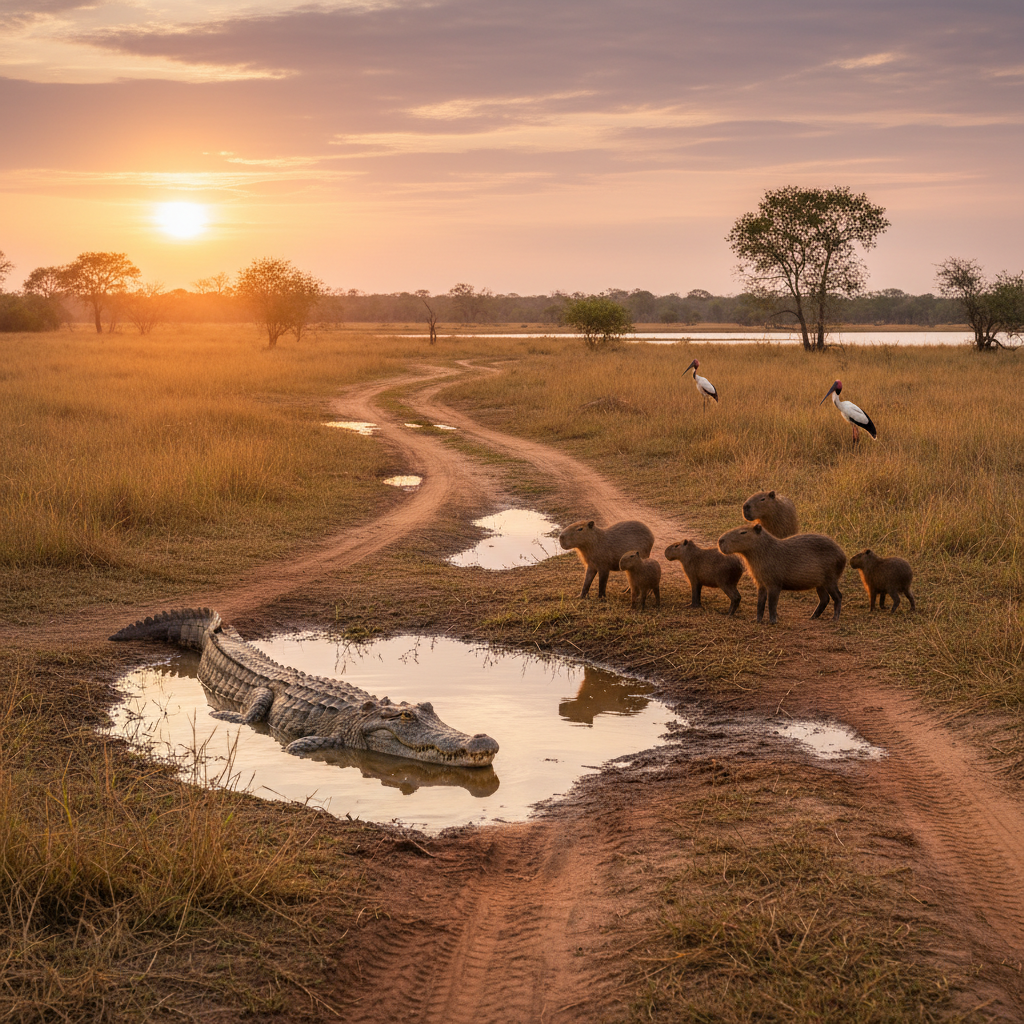
Visit Brasil describes the Pantanal as the largest flooded plain on the planet and a paradise for wildlife observation. The same official source highlights caimans, jaguars, capybaras, tapirs, anteaters, macaws, and tuiuiús, plus local experiences by boat, safari vehicle, horseback, or on foot.
How to Get There and Move Around
Many international travelers enter through São Paulo or Rio and connect onward to Campo Grande or Cuiabá, depending on the lodge region they choose. From there, lodges often arrange road transfers. Some areas require long drives on paved and unpaved roads, so arrival timing matters.
Quick Logistics Overview
- Best arrival city: Campo Grande or Cuiabá, depending on the lodge area
- Nearest airport: varies by itinerary; many trips begin from Campo Grande or Cuiabá
- Best way to get around: lodge transfer, 4×4 vehicle, boat, or guided safari vehicle
- Average transfer time: often 3 to 6 hours by road after your flight
- Road or transport warning: unpaved roads, dust, and weather conditions affect travel time
- Best time of day to travel: daylight hours, especially for first transfers into remote lodges
Practical Quick Guide
Top Experiences
- Wildlife drives at sunrise and sunset: Cooler hours improve comfort and often make animals easier to spot. These are usually the core activity for first-time visitors.
- Boat trips in channels and river sections: Visit Brasil notes traditional chalana-style experiences. They are excellent for birds, caimans, and a different perspective on the wetlands.
- Jaguar-focused safaris in specialist regions: Official tourism material specifically mentions photographic safari areas known for jaguar viewing. This is best for travelers willing to spend more and focus on one goal.
- Birdwatching without rushing: The Pantanal works well even if you are not a serious birder. Macaws, jabirus, herons, and raptors are often part of the everyday scene.
- Lodge stays that include local rhythm: The experience is not only about wildlife. Pantanal lodges often connect you to ranch routines, regional meals, and a slower pace.
SEM FIO Travel Tip:
Choose your lodge by ecosystem access and guiding quality, not only by room photos. In the Pantanal, the right location matters more than decorative luxury.
What to Eat and Drink
Visit Brasil highlights regional flavors such as stuffed fish, piranha broth, quebra-torto, paçoca de carne seca, sarrabulho, and sopa paraguaia. Meals in Pantanal lodges are often generous and practical because days start early. Expect fresh fruit, rice, beans, grilled meat or fish, and simple desserts. If you have dietary restrictions, notify your lodge well in advance because remote properties may have limited flexibility.
Safety and Cultural Etiquette
The Pantanal is generally straightforward when you travel with a licensed lodge or guide. The biggest risks are environmental: heat, dehydration, insects, river edges, and overconfidence around animals. Stay on marked paths, follow boat instructions, and never feed wildlife. Respect ranch properties and rural working routines. Useful Portuguese: água (water), repelente (insect repellent), and obrigado/obrigada (thank you). Card payment can be inconsistent in remote areas, so keep a backup method.
Estimated Costs
What Affects Your Budget
- Season: dry season and school holidays can increase rates
- Exchange rate: affects all foreign-traveler costs
- Lodge category: rustic, full-board, or premium safari lodge
- Transfer distance: remote lodges cost more to reach
- Activity style: shared outings are cheaper than private safaris
- Photography focus: specialist jaguar trips are usually pricier
- Length of stay: short stays can feel expensive because transfers are fixed
All costs are estimates and may change with season, exchange rates, lodge category, transport conditions, and activity choices.
What to Pack
- Lightweight long sleeves for sun and insects
- Neutral-colored clothing for wildlife outings
- Strong insect repellent
- Closed shoes or boots for lodge terrain
- Binoculars or a zoom lens if wildlife is your priority
Common Mistakes to Avoid
- Treating the Pantanal like a simple day trip destination
- Booking a lodge without understanding transfer time
- Packing only beach clothes and no sun or insect protection
- Expecting zoo-style sightings on a fixed schedule
Suggested Itinerary
Day 1
- Morning: arrive in Campo Grande or Cuiabá and transfer to lodge
- Afternoon: settle in and join a short introduction safari
- Evening: early dinner and night spotting if offered
Day 2
- Morning: sunrise drive or boat trip
- Afternoon: rest during the heat, then a second outing
- Evening: lodge dinner and stargazing
Day 3
- Morning: birdwatching or walking trail with guide
- Afternoon: boat excursion or horseback outing if available
- Evening: final sunset safari focused on photography
Final Thoughts
The Pantanal is one of the easiest places in Brazil to feel the scale of the country’s natural wealth. Go in the dry season if you want the smoothest first experience, build in enough days for the transfers to make sense, and pick your lodge with care. The result is not just a wildlife trip. It is a different way of understanding Brazil.
References:
- Visit Brasil, Pantanal: https://visitbrasil.com/en/location/pantanal-en/
- Visit Brasil, Safari in the Pantanal: https://feel.visitbrasil.com/en/safari-pantaneiro-6/
- Visit Brasil, Birdwatching in the Pantanal: https://feel.visitbrasil.com/en/birdwatching-no-pantanal-2/
- Visit Brasil, Jaguar photographic safari: https://visitbrasil.com/en/embark-on-a-photographic-safari-in-the-best-region-of-the-pantanal-to-observe-jaguars/