What to Eat in Salvador, Bahia
A practical food guide to Salvador for international travelers, focused on Afro-Brazilian cuisine, market culture, where to eat, what to order first, and how to navigate the city respectfully.
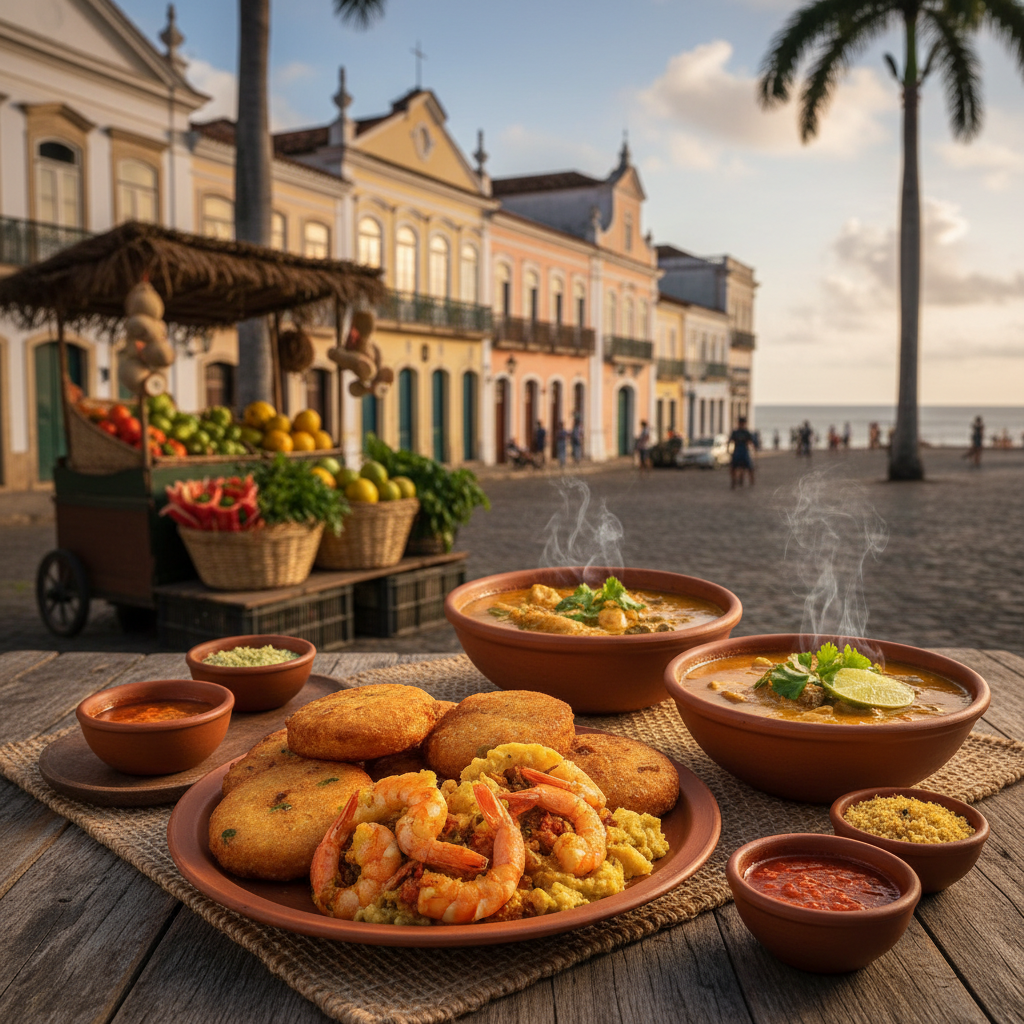
What to Eat in Salvador Bahia: An Afro-Brazilian Food Guide
Salvador is one of the few cities where food does not sit on the sidelines of culture. It is one of the main ways the city explains itself. For international travelers, that matters because Bahian cuisine can be delicious, rich, and unfamiliar all at once. You may recognize seafood, rice, beans, or fried snacks, but the flavors of dendê oil, coconut milk, ginger, pepper, and Afro-Brazilian cooking traditions give Salvador a distinct identity that feels different from Rio, São Paulo, or southern Brazil.
Why This Brazil Travel Experience Matters
This guide is best for travelers who want to understand Salvador through everyday eating, not just through a fine-dining reservation. Two to four days is enough to taste the city well if you stay organized. The main challenge is that some iconic dishes are heavy, spicy, or oil-rich, so pacing matters. What makes this experience genuinely Brazilian is the city’s deep Afro-Brazilian heritage expressed in food, street life, music, and religious traditions.
Visit Brasil describes Salvador as the center of Afro-Brazilian culture in Brazil and specifically links the city’s identity to acarajé, capoeira, Pelourinho, Rio Vermelho, and traditional dishes such as moqueca and vatapá.
How to Get There and Move Around
Most international travelers reach Salvador through Salvador International Airport and then use ride apps or taxis to reach areas such as Pelourinho, Barra, Rio Vermelho, or Santo Antônio Além do Carmo. For food-focused travelers, it makes sense to stay in a neighborhood where you can walk to dinner and use cars only for longer hops.
Quick Logistics Overview
- Best arrival city: Salvador
- Nearest airport: Salvador International Airport (SSA)
- Best way to get around: ride apps, taxis, and short walks within each neighborhood
- Average transfer time: often 30 to 60 minutes from the airport depending on traffic
- Road or transport warning: hills, cobblestones, and traffic make neighborhood-hopping slower than it looks on a map
- Best time of day to travel: morning sightseeing, then late afternoon into dinner for food exploration
Practical Quick Guide
Top Experiences
- Start with acarajé: Visit Brasil notes that the craft of Bahian acarajé is recognized as Brazilian cultural heritage. This is the most iconic street-food starting point.
- Eat moqueca in the historic core or nearby districts: Pelourinho and Santo Antônio Além do Carmo are strong areas for classic Bahian meals in atmospheric settings.
- Explore Rio Vermelho at night: Official tourism material highlights Rio Vermelho for restaurants that blend local and international influences.
- Pair food with culture: Pelourinho, MUNCAB, Casa do Carnaval, and live music venues help explain the context behind what you are eating.
- Watch sunset and then eat well: Barra and Solar do Unhão combine scenery with easy transitions into dinner plans.
SEM FIO Travel Tip:
Bahian food can be richer and hotter than many first-time visitors expect. Order one iconic dish at a time, share when possible, and ask whether a recipe contains dendê oil or strong pepper before ordering.
What to Eat and Drink
Start with acarajé, a black-eyed pea fritter split and filled, often with vatapá, salad, and shrimp. Then move to moqueca baiana, the Bahian fish or seafood stew built around coconut milk and dendê oil. Vatapá itself, a creamy paste-like preparation, appears on its own and inside other dishes. Bobó de camarão is another classic, usually creamier and softer in texture. If you want something less intense, order grilled fish, rice, beans, and salad before working up to the richer dishes.
Street food is part of the experience, but choose busy stalls with active turnover. In markets and tourist corridors, check prices before ordering extras. Drinks vary widely, but fresh juices and coconut water are easy daytime choices. At night, caipirinhas are common, though heat and strong flavors make hydration important.
Safety and Cultural Etiquette
Respect matters in Salvador. Food traditions are tied to Afro-Brazilian communities, religious histories, and women whose work carries deep cultural significance. Take photos only when appropriate and ask first at stalls or in cultural settings. Use ride apps after dark between neighborhoods instead of trying to walk long distances through unfamiliar areas. Card payment is common, but some small vendors may prefer cash or have unstable signal. Useful Portuguese: sem pimenta (without chili), com dendê? (with dendê?), and quanto custa? (how much is it?).
Estimated Costs
What Affects Your Budget
- Season: Carnival and major festivals raise prices sharply
- Exchange rate: affects hotel and restaurant budgets
- Dining style: street food and simple lunch spots cost far less than destination restaurants
- Neighborhood: Barra and Rio Vermelho can differ from Pelourinho depending on venue
- Alcohol: cocktails quickly raise the bill
- Transport choices: repeated car rides add up across hilly neighborhoods
- Hotel category: beachside and boutique stays usually cost more
All costs are estimates and may change with season, exchange rates, neighborhood, and travel style.
What to Pack
- Light clothes for tropical heat
- Comfortable shoes for slopes and cobblestones
- A reusable water bottle
- A compact umbrella or light rain layer
- Stomach-friendly basics if you are sensitive to spicy or rich food
Common Mistakes to Avoid
- Eating too heavily at lunch and losing the evening food window
- Assuming all Bahian dishes have the same spice or oil level
- Walking long distances between nightlife areas after dark
- Treating food traditions as simple tourist performance rather than living culture
Suggested Itinerary
Day 1
- Morning: explore Pelourinho and nearby churches or museums
- Afternoon: light lunch and rest
- Evening: acarajé stop followed by dinner in the historic center
Day 2
- Morning: Barra or waterfront sightseeing
- Afternoon: museum or market visit
- Evening: dinner in Rio Vermelho with live music nearby
Day 3
- Morning: slower breakfast and coffee
- Afternoon: final cultural stop and souvenir shopping
- Evening: one last Bahian seafood meal before departure
Final Thoughts
Salvador rewards travelers who understand that food here is not a side attraction. It is one of the clearest routes into the city’s history, faith, music, and daily life. If you eat with curiosity and a bit of pacing, Salvador becomes easier to understand and much harder to forget.
References:
- Visit Brasil, Salvador: https://visitbrasil.com/en/location/salvador-en/
- Visit Brasil, Bahian Cooking Class: https://feel.visitbrasil.com/en/aula-de-culinaria-baiana-2/
- Visit Brasil homepage: https://visitbrasil.com/